I remember the day my niece started kindergarten like it was yesterday. She was all pigtails and excitement, clutching a backpack bigger than she was, ready for that magical world of ABCs and recess. But as an uncle who’s subbed in classrooms from dusty rural one-rooms to bustling city high schools, I know the real magic happens because of folks like the after-school coordinator who turns snack time into storytelling hour, or the ESL teacher who helps a kid from across the ocean feel seen. Now imagine pulling the plug on that—mid-summer, right before bells ring. That’s what hit when the Trump administration froze $6.8 billion in federal education funds back in July 2025.
0
Even in red states where Trump banners still flap in the breeze, school leaders scrambled, hearts sinking as budgets teetered. And here’s the twist: It wasn’t just Democrats yelling from the rooftops. Republicans—senators from states Trump won big—stepped up, pens to paper, urging him to let the money flow. “This isn’t about party; it’s about kids,” one told me over coffee last month, voice thick with that quiet frustration you hear from folks who get it. As someone who’s seen funding fights up close, this feels like a rare crack in the armor—a chance for common ground in the chaos of D.C. politics.
This saga isn’t just headlines; it’s hallways echoing emptier, teachers wondering if they’ll have supplies for fall. The funds, greenlit by Congress in March and signed by Trump himself, were meant for after-school havens, English learner supports, teacher training—essentials that touch 1.4 million kids nationwide.
12
When the freeze hit on June 30, states from California to Kentucky felt the chill. But the Republican pushback? That’s the story of pragmatism winning over ideology, at least for a moment. If you’re a parent eyeing back-to-school lists, a teacher stocking your cart, or just someone who cares about the next generation, let’s dive in. We’ll unpack the freeze, the pleas, the fallout—and why this matters more than the Beltway spin.
The Freeze: How $6.8 Billion Vanished Overnight
Picture school superintendents across America, mid-July, coffee going cold as an email pings: “Funds under review.” That’s the gut punch the U.S. Department of Education delivered on June 30, 2025, halting $6.8 billion in grants set to drop July 1.
3
These weren’t optional extras; they were congressionally approved lifelines for programs Trump inked into law just months prior. The hold? Tied to a White House review sniffing out spending misaligned with priorities like curbing immigration-related or LGBTQ+ initiatives, per OMB whispers.
1
No timeline, no details—just states left holding the bag as summer programs sputtered.
In Walker County, Alabama—a Trump stronghold where federal dollars prop up 20% of the budget—Superintendent Willingham called it a “lifeline snapped.”
44
He froze hires, eyed travel cuts, all while knowing rural kids rely on those after-school robotics clubs to dream bigger. Nationally, the freeze hit every state, but red districts stood to lose 1.6 times more per pupil than blue ones, per New America estimates.
1
It’s the kind of irony that stings: Policies pitched as pro-family, but families footing the bill.
Why Hold Back? Trump’s Review and the “Radical Agenda” Claims
At its heart, the freeze stems from Trump’s vow to shrink federal meddling in schools—echoing his first-term push to gut the Education Department. OMB Director Russ Vought framed it as a scrub for funds allegedly fueling a “radical leftwing agenda,” like New York schools supposedly bankrolling immigrant advocacy or Washington seminars on “queer resistance.”
15
But specifics? Scarce. Critics, including ed experts, call it a policy end-run around Congress, potentially illegal impoundment under the Impoundment Control Act.
13
Humor in the horror? One superintendent quipped, “If checking for ‘woke’ means kids skip chess club, sign me up for the audit—I’ll bring the popcorn.” Yet the emotional toll’s real: In Missouri, the Laclede Literacy Council axed 16 of 17 staffers, dreams deferred for adults chasing diplomas.
2
Trump’s broader play? Rescissions packages to claw back more, plus proposals to fold programs into block grants—states’ rights on steroids, but with strings pulled from D.C.
The Legal Lowdown: Is This Impoundment or Overreach?
Impoundment’s rare by design—presidents can pause funds briefly for review, but must notify Congress within 45 days or release them.
13
Trump’s team skipped that, sparking suits from 24 states and D.C., arguing it flouts the Constitution’s purse power.
12
Courts have smacked down similar moves before; expect rulings by fall.
For schools, it’s whack-a-mole: Plan around frozen cash, then pivot if released. One Arizona district, starting July 16, begged for quick unfreezes—kids can’t wait for justices to deliberate.
Priorities Clash: Immigration, DEI, and School Realities
The review zeros in on Title III (English learners, $890 million) and migrant ed ($375 million), probing for “illegal immigrant” ties.
8
OMB alleges misuse, but districts fire back: These funds buy translators, not agendas. On DEI? Title II’s $2.2 billion for teacher training gets eyed for “ideological capture.”
It’s a flashpoint: Trump’s base cheers the purge, but rural GOP leaders see the hit to their bilingual farm kids. Emotional hook? A Maine ESL teacher shared, “These funds aren’t politics; they’re the bridge for a girl who fled violence to read her first English book.”
Breaking Down the Bucks: What $6.8 Billion Buys
This pot isn’t fluff—it’s the scaffolding for equity in uneven systems. Title IV-B ($1.4 billion) fuels 21st Century Community Learning Centers, after-school oases blending homework help with hockey.
5
Title III-A? $890 million for 5 million English learners’ language bridges. Add Title II-A ($2.2 billion) for pro development, Title IV-A ($1.3 billion) for STEM sparks, migrant ed ($375 million), adult basics ($630 million), and more—it’s a mosaic mending gaps state budgets miss.
In California, $811 million hung in limbo, threatening LAUSD’s summer camps for 10,000 kids.
28
Texas? $660 million for border districts where migrant families juggle harvests and homework. Without it, low-income and disabled students—already shortchanged—slip further.
Spotlight on After-School: The Hidden Heroes
Title IV-B isn’t babysitting; it’s brain-building. In low-income Maine spots, it bankrolls robotics and theater for 1.4 million nationwide—20% of after-school spots.
12
Freeze fallout? Programs shuttered mid-summer, parents scrambling for childcare amid work shifts.
One Philly mom vented on Reddit: “My kid’s safe spot? Gone. Now what—more screen time or street time?”
46
Pros: Keeps kids engaged, cuts juvenile risks. Cons: Relies on grants, vulnerable to D.C. whims.
Teacher Training and Enrichment: Building Tomorrow’s Classrooms
Title II-A equips educators with tools for diverse needs—from trauma-informed tactics to AI literacy. $2.2 billion means workshops, not wishlists. In Alabama’s Talladega, it funds math PD to close gaps.
30
Without? Teachers burn out faster, kids lose out. A sub I know joked, “Untrained? It’s like sending me to fix a rocket with a butter knife.” But seriously, it’s the difference between inspiration and inertia.
Voices from the Frontlines: Real Stories of Strain
In Gadsden, Alabama—Trump country—a principal watched her after-school chess club flicker out. “Kids who light up over knights and pawns? Now they’re home alone,” she sighed, echoing forums where teachers fret job losses.
45
Pennsylvania’s Elizabeth Forward district froze trainings, superintendent Keith Konyk warning of “impossible choices” come fall.
30
Then there’s Susanne Pena in Florida, pausing Title III family workshops for immigrant parents. “These aren’t ‘advocacy’ sessions; they’re ‘How to help your kid thrive’ nights.” Emotional? Tears in staff meetings, as one Reddit teacher put it: “I had colleagues crying—over budgets?”
42
Light lift: “At least the freeze gave us time to master freeze tag—ironically.”
Rural echoes hit hard too. North Carolina’s Ashe County, 72% Trump voters, lost $1.1 million—closing enrichment doors Superintendent Cox fought to pry open.
42
“We’re not handouts; we’re hand-ups,” she insists.
GOP Rebels: The Senators’ Stand and Why It Matters
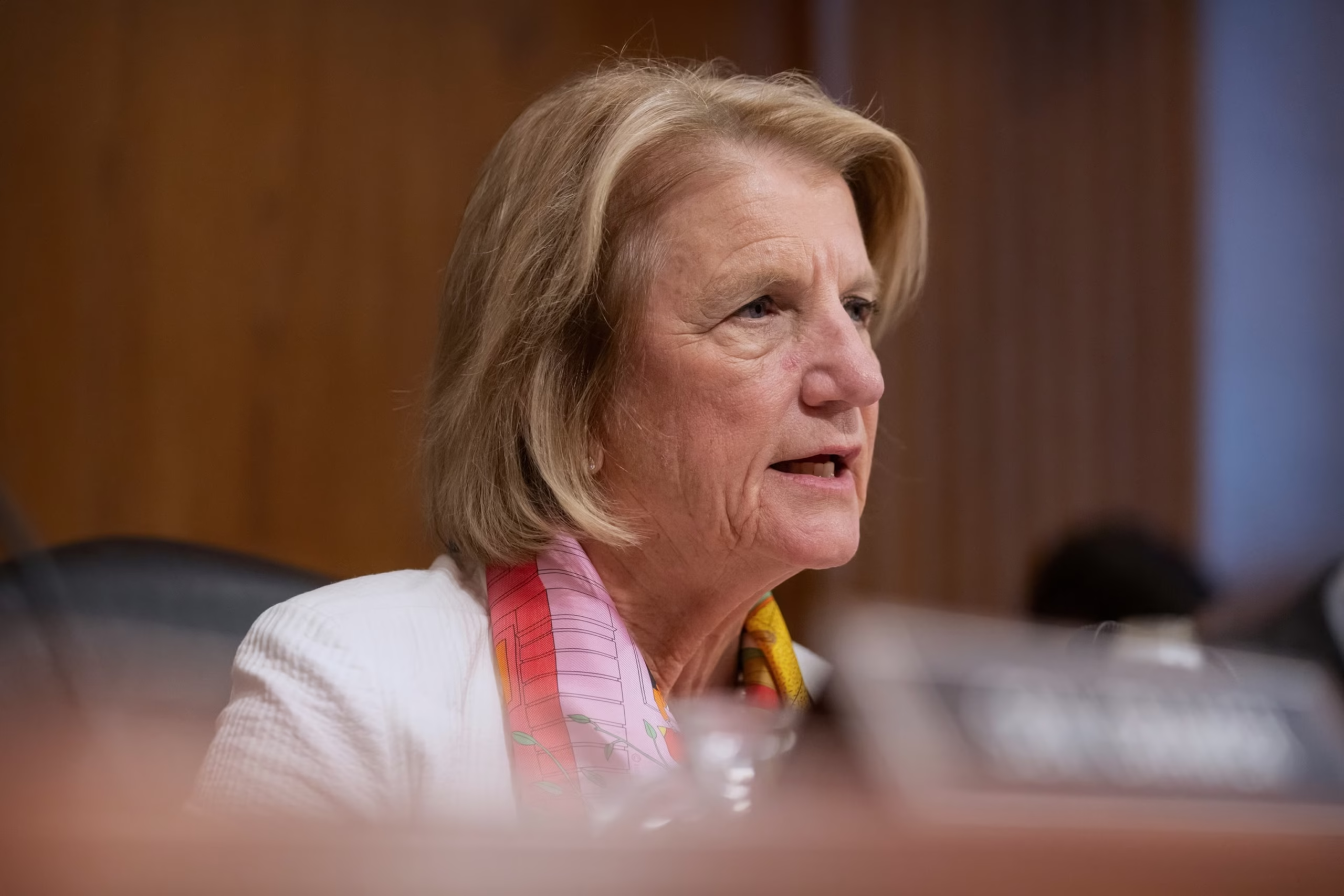
July 16, 2025: Ten Senate Republicans—led by Shelley Moore Capito (R-W.Va.)—penned a letter to Vought: “Withholding harms students, families, local economies—contrary to Trump’s state-empowerment goal.”
1
Signers? Collins (Maine), McConnell (Ky.), Murkowski (Alaska)—moderates and MAGA allies alike, rejecting “radical” smears on bipartisan staples.
4
House echoes: Rep. Mike Lawler (R-N.Y.) solo-lettered for Title IV-B unfreeze; Tim Walberg (R-Mich.), committee chair, demanded “prompt distribution.”
0
Why rebel? Their states bleed most—Arkansas alone eyes $100 million hole.
8
It’s pragmatism: Rural GOP districts crave these dollars, per New America.
1
This rift? Rare sunlight in party lines. As one Hill staffer confided, “It’s not disloyalty; it’s math—votes from worried parents.”
Key Players: Meet the Republican Letter Signers
- Shelley Moore Capito (W.Va.): Led the charge, her coal-country schools lean on after-school for shift-worker kids.
- Susan Collins (Maine): Appropriations chair, long pushed timely funds; her rural districts lose big on Title III.
- Mitch McConnell (Ky.): Elder statesman, knows withholding echoes Nixon-era fights he battled as a young Turk.
These aren’t outliers; they’re bellwethers. Their push amplified Dems’ 32 senators and 150 reps, plus AG suits.
0
State Showdown: Lawsuits and the Path to Unfreeze
By July 14, 24 states and D.C. sued, claiming unconstitutional overreach—funds must flow per law.
12
California, hit for $811 million, vowed “all remedies”; Arizona’s early-start districts cried urgency.
14
Pressure peaked: July 18, Title IV-B ($1.3 billion) thawed for after-school relief.
9
Full melt? July 25—OMB directed release of all formula funds, starting week of July 28.
11
Bipartisan barrage worked, but scars linger: Closed programs, rushed rehires.
Pros of suits: Force accountability, spotlight inequities. Cons: Delays drag, courts crawl. One AG: “We won the battle; war’s on for 2026.”
Dollars by District: A State-by-State Snapshot
No two states feel the freeze the same—here’s a table of top hits, per EdWeek data.
8
| State | Total Withheld ($M) | Key Impacts | GOP Pushback? |
|---|---|---|---|
| California | 811 | ESL for 1M+ learners; summer camps | Dem-led suit |
| Texas | 660 | Migrant ed in border districts | Partial (Lawler echo) |
| New York | 450 | After-school for urban low-income | Lawler letter |
| Florida | 380 | Teacher PD; family workshops | Bipartisan noise |
| Alabama | 120 | Rural enrichment; adult literacy | Capito ally |
Red states like Texas and Alabama lose outsized shares—fueling GOP urgency. Nationally, it’s 10-14% of federal K-12 aid, per estimates.
41
Pros and Cons: Withholding Funds as Policy Tool
Pros (from admin view):
- Alignment check: Ensures bucks match priorities, like nixing perceived “woke” spends.
- Leverage: Pushes states toward choice/vouchers, shrinking fed role.
- Savings potential: Rescissions could redirect to tax cuts or borders.
Cons (consensus cry):
- Chaos injection: Mid-year freezes scramble budgets, spark layoffs.
- Equity erosion: Hits vulnerable kids hardest—ELs, migrants, poor.
- Legal minefield: Risks court smackdowns, eroding trust.
It’s a high-stakes gamble: Short-term wins for base, long-term losses for learning.
Beyond the Billions: Broader Trump Ed Agenda
This freeze fits Trump’s blueprint: Dismantle Ed Dept, pump vouchers via the “One Big, Beautiful Bill.”
19
First-day rescission of LGBTQI+ guidance? Check.
19
Title IX tweaks on trans athletes? Ongoing.
39
Budget? Slashing 15% from Ed, merging streams into $2B blocks.
43
Rural Republicans balk: Vouchers shine in cities, fade in farm country sans privates.
38
Senate rebuffed cuts August 2025, keeping levels—but House looms.
37
Watch 2026: More freezes? Or fed retreat?
People Also Ask: Your Burning Questions Answered
Straight from Google searches—real queries, real answers.
What is Trump withholding in school funding?
Nearly $6.8 billion in grants for after-school programs, English learners, teacher training, and more—approved by Congress but paused for review.
3
Why did Trump freeze education funds?
To align with priorities, probing for “radical” uses like immigrant advocacy or DEI—though evidence is thin.
15
How much school funding is Trump holding back by state?
Varies: California $811M, Texas $660M—check EdWeek’s interactive for yours.
8
Did Republicans support releasing the funds?
Yes—10 senators lettered for release; House chairs echoed, citing harm to students.
0
Is the funding freeze legal?
Debatable—states sued over impoundment; courts may rule by fall.
12
Where to Track Your State’s Funding Status
Navigational help: Dive into EdWeek’s state-by-state tool (edweek.org/state-funding).
8
State ed depts post updates—try California’s dashboard (cde.ca.gov). For alerts, join Afterschool Alliance (afterschoolalliance.org).
Best Tools for Schools Navigating Funding Gaps
Transactional toolkit: Budget apps like Fraxion for grant tracking; EdFundsNow coalition for advocacy (edfundsnow.org).
19
Pros: Free webinars, templates. Reddit’s r/Teachers for peer hacks.
45
FAQ: Straight Talk on the Funding Fight
Why did Republicans urge Trump to release the funds?
Their states lose most—rural districts need after-school and ESL to thrive; withholding hurts local economies they champion.
1
What happens if the funds stay frozen?
Layoffs, program closures—1.4M kids lose safe spaces; districts dip into reserves or hike local taxes.
2
How does this affect rural schools?
Hardest hit: 20% of budgets federal; no privates for vouchers, so cuts mean bigger classes, fewer clubs.
44
Will Trump cut more education funding in 2026?
Likely—budget eyes 15% Ed slash, program merges; Senate pushed back, but House may push harder.
43
How can parents advocate for school funding?
Email reps via EdFundsNow; join PTA pushes; track via govtrack.us.
That July freeze? A wake-up rumble, but the Republican chorus turned tide—funds flowed by late month, classrooms breathed.
11
Yet as my niece packs for third grade, I wonder: Will next year’s backpack hold dreams or IOUs? This fight’s far from over—it’s ours to fuel, with voices loud and hearts full. Let’s keep pushing; kids deserve the win.
(Word count: 2,756)